Introduction
The Official Languages Commission was established by the Official Languages Commission Act No. 18 of 1991. The key task of the Commission is to regulate and supervise provisions relating to the language rights contained in Chapter IV of the Constitution of the Democratic Socialist Republic of Sri Lanka.
Bureau of Rehabilitation Act
To create an Intelligent, Healthy and a disciplined future generation.
To build up future Sri Lankan society with Intelligent, Healthy, Strong and Disciplined Individuals
Introduction
At the end of the humanitarian operation in 2009, a considerable number of ex-combatants surrendered to the government forces. After that, then government decided to rehabilitate them and re-integrate them into society as disciplined, law-abiding and useful members of society. The rehabilitation of ex-combatants was entrusted to the Bureau of Rehabilitation and accordingly, 12,196 ex-combatants were rehabilitated and re-integrated to the society. On completion of rehabilitating ex-combatants, the rehabilitation of drug addicts was entrusted to the Bureau of Rehabilitation in 2013. There are three rehabilitation centers under the Bureau and they are located at under mentioned locations:
- Navodawa Treatment Centre at Kandakadu.
- Navodawa Tertiary & Vocational Literacy Training Centre at Senapura.
- Saranga Centre at Vavuniya.
The duration of the rehabilitation programme is six months and the inmates are provided with all basic requirements during their stay at the rehabilitation centers. Further, the rehabilitees go through number of mental health programmes, spiritual development programmes, various therapies, educational programmes, IT, Leadership and personality development programmes, Music, Sports and a series of Vocational training programmes as per a specially designed syllabus and a treatment plan. In addition to the above mentioned programmes, several other programmes are available for the inmates under the theme of “beyond rehabilitation”, in order to transform the drug addicts into useful members of the society.
There are 13 branch offices of the Bureau of Rehabilitation island-wide to assist the reintegrated inmates to lead a peaceful life after their rehabilitation period. Those branch offices are known as “Socio-Economic and Welfare Coordinating Offices for Rehabilitated Beneficiaries” (SEWCORB)The powers, and functions of the Bureau of Rehabilitation
- provide treatment and rehabilitation to drug dependant persons, who in terms of the Drug Dependant Persons (Treatment and rehabilitation) Act, No. 54 of 2007 request treatment and rehabilitation or are required by such law to be provided with treatment and rehabilitation;
- provide rehabilitation to any person who in terms of a relevant law, requests rehabilitation or is required by such law to be provided with rehabilitation;
- enhance the employability of persons undergoing treatments and rehabilitation, minimizing the risk of socio-economic marginalization;
- engage in an organized manner, the potentials of persons who are undergoing treatments and rehabilitation to use them productively to enhance the economy;
- advice the Minister with regard to programmes for rehabilitation, treatment and aftercare having regard to the basic norms of Human Rights;
- review, monitor and provide any other assistance to persons who have re-integrated into the society after treatments and rehabilitation;
- receive grants, gifts or donations in cash or kind: Provided however, the Bureau shall obtain the prior written approval of the Department of External Resources of the Ministry of the Minister assigned the subject of Finance, in respect of all foreign grants, gifts or donations made to the Bureau;
- open and maintain any account with any bank as it may think appropriate and such account shall be operated in accordance with prevailing applicable written laws;
- manage, control, administer and operate the Fund of the Bureau;
- invest such amount of money belonging to the Bureau as are not immediately required for the purposes of this Act;
- acquire, hold, take or give on lease or hire, mortgage, pledge, sell or otherwise dispose of any movable or immovable property;
- enter into and perform either directly or indirectly through any officer or agent of the Bureau, all such contracts or agreements as may be necessary, for the exercise of the powers and the carrying out of its functions;
- make rules in respect of the administration of the affairs of the Bureau;
- establish and maintain Centers for Rehabilitation: Provided however, the centers established for the rehabilitation of drug dependant persons to be established and maintained under the direction of the National Dangerous Drugs Control Board;
- conduct training programmes relating to rehabilitation; and
- do all such other acts which may be incidental or conducive to the attainment of the objective of this Act or the exercise of the powers assigned to the Bureau under this Act.Aims and Objectives of the Bureau of Rehabilitation
Aims of the Bureau of Rehabilitation
- To assist the rehabilitees to distance themselves from the usage of drugs and direct them into a behavioural change through psychological methods.
- To prevent them from being addicted to dangerous drugs through the transformation of their living ambience and environment.
- To impart them knowledge in vocational exposure so that they can make themselves available for empolyment opportunities after reintegrating into society.
- Strengthening of the family bonds, making awareness on its importance and reciprocal responsibilities and uplifitment of the economic, social and welfare aspects of upkeeping the family unit.
Objectives
The objective of the Bureau is to rehabilitate drug dependant persons or any other person as may be identified by law as a person who requires rehabilitation and which may include treatment and adoption of various therapies in order to ensure effective reintegration and reconciliation, through developing socio-economic standards
Contact Details
Bureau of Rehabilitation,
No: 462/2,Kaduwela Road,
Ganahena,
Battaramulla.
+94 112 883 891/ +94 112 577 457
+94 112 883 737/ +94 112 883 899
Contact Details
| Name & Designation | Telephone | Mobile | Fax |
| Major General Dharshana Hettiarrachchi RSP VSV USP ndu psc MA Commissioner General Rehabilitation |
+94 112 883 736 | +94 773 396 231 | +94 112 883 737 +94 112 883 899 |
| Brigadier Prasanna Priyalal USP Isc Commissioner (Rehabilitation) |
+94 112 883 891 | +94 769 664 237 | +94 112 883 737 +94 112 883 899 |
| Brigadier Shiran Amith Isc Commissioner (Admin) |
+94 112 883 891 | +94 772 198 425 |
To create Reconciliation among Nationalities and ensure Human Rights through Economic and Social Prosperity.
To promote Reconciliation for the well being and Security of all Sri Lankans through implementing Reparations policies by empowering Aggreived parties.
Introduction
Office for Reparations Act No. 34 of 2018 was enacted to repeal the Rehabilitation of Persons,Properties and Industries Authority Act No. 29 of 1987 and to provide for the provision for all matters connected therewith or incidental thereto and to identify aggrieved persons eligible for reparations and to provide provision of individual and collective reparations to such persons
Objectives
Functions of the office for reparations under the provisions of the office for Reparations Act No. 34 of 2018 as follows:
- To formulate and recommend to the cabinet of Ministers, Policies on reparations to grant individual and collective reparations to aggrieved persons.
- To facilitate and implement such policies on reparations as approved by the Cabinet of Ministers, by the office for Reparations, including specialized policies on public education, memorialization and on children, youths, women and victims of sexual violence ad persons with disabilities.
- To establish links to ensure the compatibility of the office for reparations with other mechanisms aimed at reconciliation.
- To monitor and evaluate the progress of delivery of reparations to eligible aggrieved persons.
Opportunities
About Us
The Bill to establish the Office on Missing Persons (OMP) was presented in Parliament on 22 June 2016 and the Office on Missing Persons (Establishment, Administration, and Discharge of Functions) Act, No. 14 of 2016 (OMP Act) was passed in Parliament on 11 August 2016. On 28 February 2018, seven commissioners and a chairperson were appointed based on the recommendations of the Constitutional Council.
The establishment of the OMP marks a significant milestone in the efforts of the Government of Sri Lanka to address the issues of the missing and disappeared. Successive governments set out measures to investigate disappearances, including through appointing commissions of inquiry or ad-hoc mechanisms with limited mandates. While making critical contributions in the way of recommendations, these previous mechanisms were unable to provide answers to the many thousands of families searching for their loved ones.
As a permanent and independent state institution, the OMP is responsible for clarifying the fate and whereabouts of persons who went missing or disappeared in connection with the conflict, political unrest, or civil disturbances, or as a result of enforced disappearances.
Mandate
The OMP Act in Section 27 defines a missing person as a person whose fate or whereabouts are reasonably believed to be unknown and such person is reasonably believed to be unaccounted for and missing in connection with the conflict, political unrest or civil disturbances or as a result of enforced disappearance. The OMP’s mandate is not limited to any particular period, community or region. The OMP Act in Section 10(1) has an explicit mandate to:
Search for missing and disappeared persons
(a) Search for and trace missing persons and identify appropriate mechanisms for the same and to clarify the circumstances in which such persons went missing
Make recommendations to authorities
(b) Make recommendations to the relevant authorities towards addressing the incidence of missing persons
Protect the rights and interests of victims and their families
(c) Protect the rights and interests of missing persons and their relatives as provided for in the Act
Identify avenues of redress
(d) Identify avenues of redress to which missing persons and relatives of missing persons are entitled and to inform the missing person (if found alive) or relative of such missing person of same
Compile a database of the missing and disappeared
(e) Collate data related to missing persons obtained by processes presently being carried out, or which were previously carried out, by other institutions, organizations, Government Departments and Commissions of Inquiry and Special Presidential Commission of Inquiry and centralize all available data within the database established under the Act
Other activities to achieve objectives
(f) Do all such other necessary things that may become necessary to achieve the objectives under the Act
Board Members
The Chairperson and members of the board of the OMP are appointed based on the recommendations of the Constitutional Council. The Constitutional Council follows a selection process that includes the issuance of a public advertisement calling for suitable candidates to apply. The OMP Act requires that the Board reflect the pluralistic nature of Sri Lankan society, with prior experience in fact-finding or investigation, human rights law, international humanitarian law, humanitarian response, or possess other qualifications relevant to the discharge of functions of the OMP.
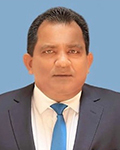 |
Mr. Mahesh Katulanda Mr. Mahesh Katulanda holds a multi-disciplinary background such as legal, humanitarian intervention, management and research. In addition to chairmanship of OMP, he is currently appointed to the Board of LCBF from September 2021. He is a Senior Attorney-at-Law of the Supreme Court of Sri Lanka (December 1995). |
 |
Dr. Ajith Tennakoon Dr. Tennakoon is a highly accomplished Forensic Medicine specialist with MD, DLM, DFM-RCPA, MFFLM-RCP, and FFCFM qualifications. He served as Chief Judicial Medical Officer, Senior Lecturer at KDU, and Past President of multiple professional societies, contributing immensely to forensic practice in Sri Lanka. |
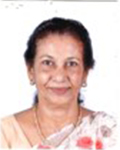 |
Mrs. Sithy Dane Arfa Thassim Mrs. Thassim served as a High Court Judge before retiring in 2015. She was the first female Muslim lawyer in the Southern Province and served as Magistrate, District Court Judge, High Court Judge, and Civil Appellate High Court Judge across multiple provinces. |
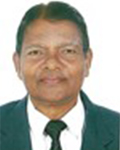 |
Mr. Thambiaiah Yogarajah Mr. Yogarajah holds a Master’s in Human Rights and Moral Ethics from Victoria Global University, India. He previously served as a senior official of the Presidential Commission to Investigate into Complaints Regarding Missing Persons (PCICMP). |
 |
Mr. P. M. W. Sampath Perera Mr. Perera holds multi-disciplinary experience in legal, commercial, and research fields. In addition to his position at OMP, he maintains an active legal practice. |
 |
Mr. Madhava Jayawardhana Mr. Jayawardhana practices Civil, Criminal, and Commercial Law in Sri Lanka’s higher courts. He holds LL.B and LL.M from the University of West London and a Master’s in International Relations. He is also involved in human rights and fundamental rights litigation. |
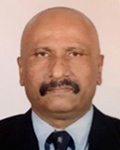 |
Mr. Jayantha Wickramasinghe |
Our Work
Tracing and Investigation Unit
This Unit is responsible for conducting investigations to search for missing and disappeared persons who fall within the OMP’s mandate, identify their whereabouts and clarify the circumstances in which they went missing. The OMP has the authority to act as an observer at excavations, exhumations and other proceedings of suspected gravesites.
Legal, Policy and Research Unit
OMP assists the OMP with its legal and policy direction. It provides legal and policy advice to the OMP on carrying out its duties and functions, conducting investigations, and cooperating with law enforcement agencies and the courts. Further, the Unit provides recommendations on areas for legal and policy reform, protecting the rights and interests of victims and their families, and ensuring non-recurrence. It is also responsible for preparing rules, guidelines, policies and standard operating procedures for the OMP.
Victim and Family Support Unit
OMP ensures that data relating to missing and disappeared persons are recorded, as it is the first point of contact for families of the missing and disappeared. The Unit has been designed to provide holistic support and ensure the well-being of the family members. This includes assisting families to access administrative and welfare services and making referrals for specialized psychosocial care. The Unit works towards integrating a psychosocial responsive and victim-centered approach when developing policies, systems, and strategies of the OMP to prevent or ameliorate further emotional distress. Assisted by the OMP staff at the Head Office, the Regional Offices collaborate with a wider network of support to help address psychosocial considerations of families of missing and disappeared persons.
Protection Unit
The responsibility of protecting the rights of victims and witnesses who face threats and reprisals is the primary duty of this Unit. In addition, it follows up on complaints made and develops protocols and strategies related to ensuring protection for victims and witnesses at risk. Furthermore, this Unit liaises with state and non-state actors to ensure the safety of victims, witnesses, and other collaborators of the OMP who face threats and intimidation. This Unit also ensures the security of the OMP staff and its premises.
Data Management Unit
The OMP is required to collate data concerning missing and disappeared persons who fall within its mandate. The Unit is consolidating data relating to missing and disappeared persons in a database, using information from previous Commissions of Inquiry, other state bodies, civil society organizations, and complaints received by the OMP. The consolidated database can be regularly updated with new data and the OMP can use this database to carry out other tasks effectively, for instance, to conduct investigations, carry out effective case management and make referrals to relevant authorities. The consolidated database can be regularly updated with new data and the OMP can use this database when conducting investigations, carrying out effective case management, and making referrals.
Communications and Outreach Unit
OMP creates greater public awareness and understanding of the mandate and work of the OMP. Through developing awareness material and campaigns, and organizing events and communication strategies, it focuses on advancing the rights of the missing and disappeared through engaging multiple stakeholders, including media and state officials. The Unit works towards ensuring that families of the missing and disappeared, as well as organizations and individuals working with them and the general public have a better understanding of the OMP’s role and services.
Human Resources and Administration Unit
OMP manages the human resource and administrative functions of the OMP. It is responsible for overseeing the OMP's day-to-day operations, logistics, human resources, training, and office support. In addition, it ensures staff welfare and development.
Finance and Procurement Unit
OMP manages all financial and procurement processes of the OMP. It provides support in terms of maintenance of fixed assets, preparation of budgets and accounts, and monitors the OMP’s compliance to practices of financial regulations.
Current Opportunities
| Description | Download |
| Vacancy Notice Closing Date : 28/06/2026 |
Application |
| Regional Coordinator Vacancy Closing Date : 05/07/2026 |
Application |
Current Progress
- The OMP/the Commission has established its head office in Colombo, and following the consultations with the public, regional offices were opened in Matara, Mannar, Jaffna, Batticaloa, and on August 2021, in Kilinochchi as well.
- The previous commissions were mainly involved in gathering information from various sources, responding to new complaints lodged by the families and translating them into a simplified database; while observing the new incoming complaints. And spent more time on establishing the office, recruiting qualified staff, and capacity-building of the officials in the first three years.
- Based on the information obtained from the families and relatives of the missing persons, in 2020, the OMP published the details of 21,374 complaints received, which is called “the provisional list”. The general public was requested in assisting to furnish the records related to their complaints. Accordingly, The progress made by OMP as of 30th of November 2023 as follows
No Description Sub total Total 01 Total Number of Complaints / Cases received by the OMP initially 21,374 02 No. of Cases with missing military personnel/ Cases with double entries 6,386 03 The number of active complaints / Cases 21,374 - 6,386
= 14,98804 Total number of preliminary inquiries concluded 4,795 In 2020 184 In 2021 95 In 2022 2,111 In 2023 2,405 05 Balance cases to be inquired 12,341 Cases reported with the date of missing between 2000-2021 – Phase I 1,230 Cases reported with the date of missing between 1980-2000 – Phase II 3,173 Cases reported with the date of missing before 1980 + the date is not clear – Phase III 5,278 + 512
= 5,790Further details about inquiries
- Number of the complaints of Missing Persons
What We Do
OMP is charged with a wide range of functions and duties which include;
- Issuance of a certificate to relatives of missing and disappeared persons to enable the Department of the Registrar General to issue Certificates of Absence (CoAs);
- Making recommendations to the relevant authorities to ensure non-recurrence;
- Providing recommendations to the office on reparations to grant family revival payment.
- Providing or facilitating the provision of administrative assistance and welfare services that include psycho-social support to the relatives of the missing and disappeared;
- Developing and enforcing a database that will include all particulars concerning missing and disappeared persons;
- Creating public awareness of the causes, incidence, and effects of missing and disappeared persons, and facilitating support among the general public to fulfill their needs
- Protecting the rights and interests of missing and disappeared persons and their relatives
- Identifying proper avenues of redress for missing and disappeared persons
- Collection data related to missing and disappeared persons from existing sources and centralize all available information in a database.
Relevant Documents
- OMP Financial Report from 2023
- OMP Annual Reports from 2023
- OMP ACT
- OMP Annual Reports from 2022
- OMP Annual Reports from 2021
- OMP Annual Reports from 2020
- OMP Annual Reports from 2019
- OMP Annual Reports from 2018
- FAQ Booklet
- Gazetted Search Guidelines 2133/36
- Comments on the Draft Guiding Principles for the search for disappeared persons.
- Follow-up on the visits of the Working Group on Enforced or Involuntary
- Disappearances to Peru and Sri Lanka: Report of the Working Group on Enforced or
- Involuntary Disappearances
- OMP Road Map
Contact Us
| Head Office | |
|---|---|
| No. 40, Level 03, Buthgamuwa Road, Rajagiriya. |
☎ +94 11 2 861 431 |
| Regional Office Batticaloa | |
| 124,Central Road, Batticaloa. |
☎ +94 65 2 224 532 /534 |
| Regional Office Jaffna | |
| 3rd Floor, New Building District Secretariat Jaffna. |
☎ +94 21 2 219 414 / 400 / 401 |
| Regional Office Mannar | |
| District Secretariat, Mannar. |
☎ +94 23 2 222 083 |
| Regional Office Matara | |
| 54,Dharmarama Road, Fort, Matara. |
☎ +94 41 2 244 684 |
| Regional Office Killinochchi | |
| A9 Road, Near the court, Killinochchi. |
☎ |
Right to Information
If you wish to request for information as per the Right to Information Act, No. 12 of 2016 please contact the numbers below:
| Mr.A. Nalinda Nuwan | Mr. W.G.S.C. Sampath |
| Head of Data Management Designated Officer |
Head of Data Management Designated Officer |
Introduction
By the Cabinet Decision dated 08th April, 2015 given in response to the Cabinet Memorandum dated 25th March, 2015 submitted by Hon. Prime Minister, the Office for the National Unity and Reconciliation (ONUR) was established under the authority of His Excellency the President.
As per the Gazette No 1945/41 dated 18.12.2015, affairs pertaining to national reconciliation have been entrusted with the ONUR under the Ministry of National Integration and Reconciliation. Meanwhile, by the Gazette Extra Ordinary dated 09th August, 2020, the ONUR came within the purview of the Ministry of Justice.
Objectives
- Making recommendations to the Government on measures to be taken to resolve issues causing to stress and conflicts existed among different communities and implementation such measures and follow up.
- Formulation of programmes to ensure reconciliation that builds up awareness, peace and unity among all communities and make recommendations to the Government and follow up.
The ONUR has implemented following programmes and projects.
- National policy or reconciliation of Sri Lanka • Social integration education.
- Conflict transformation
- Psycho-social supportive projects
- Arts and culture reconciliation
- Awareness and socialization
- Economic Engagement programme for Northern and Eastern Provinces and other conflict- hit areas under overall District Development Plan • Livelihood Development Plan.
The ONUR has played a leading role in the national reconciliation strategies by way of above programmes and projects wining the hearts of thousands of public employees and such other parties living in the North, East and any other conflicts-hit areas primarily with the support of domestic funds and the assistance of other international organizations.