“Old Politics Used Differences to Divide People. Our Challenge Is to Use Those Differences to Build a Country Where People Understand One Another”
“In Recent Elections, People Rejected the Old Political Ideology of Consolidating Power by Creating Divisions Based on Race, Religion and Language”
– Minister of Justice and National Integration says
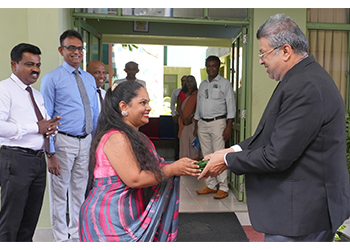
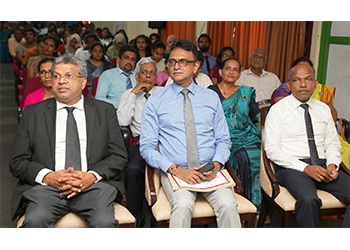
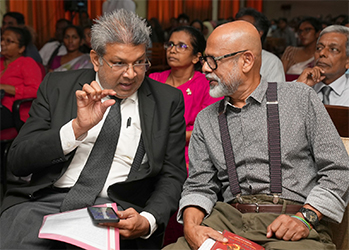
Minister of Justice and National Integration, Attorney-at-Law Harshana Nanayakkara, made these remarks while participating in an event organised by the Department of Official Languages to mark International Translation Day 2026, held this morning (30) at the premises of the Department of Official Languages.
Speaking further, the Minister of Justice and National Integration stated,
“Today, we have gathered not merely to commemorate another international day. We are speaking today about a very important profession that builds communication among people, creates bridges between cultures and, ultimately, helps bind a country together. That profession is translation.
A translator can simply be described as a person who transfers a word from one language to another. However, a translator performs a much greater task than that. Translators do not merely carry words from one person to another; they convey ideas, experiences and cultures. In some instances, they enable a person’s rights, sorrow, happiness or hopes to be accurately heard and understood by another person.
In many instances throughout our country’s recent history, politics has used this diversity not to bring people together, but to divide them.
We have witnessed instances where race, religion and language, instead of simply being aspects of people’s identity, have been turned into tools for gaining political power. We have witnessed a form of politics that created divisions between ‘us’ and ‘them’ in order to strengthen political support.
However, in the recent elections, the people of Sri Lanka have made a very important decision. They did not merely reject several political leaders; they also rejected the old political ideology of consolidating power by creating divisions based on race, religion and language.
We must understand this mandate carefully. The message from the people is: ‘I need my identity. My religion is important to me. My language is important to me. But none of these should make another person my enemy.’
Therefore, our country needs a new political culture—a politics that is not based on racism or religious divisions and that respects different cultures. Our objective is not to erase the differences among people, but to build a country where people can live together despite their differences. Language has an extremely important role to play in this journey.
We often say that public services must be brought closer to the people. However, public services do not become closer to the people merely by taking an office to a village. The State must communicate with people in a language they understand.
A farmer should be able to understand documents relating to his or her land. A citizen who goes to the police should be able to make a complaint in his or her own language. A mother who goes to a hospital should be able to understand the medical advice given regarding her sick child. An ordinary citizen who visits a government office should have the ability to obtain the required service in his or her own language.
The translator removes the communication barrier between the State and the citizen. Therefore, I do not view the programmes introduced by the Department of Official Languages during the past year as separate projects. When considered together, they reflect a single vision—the vision of bringing the State closer to the people through language.
One of the important programmes initiated during the past year under this vision is ‘Language for Religious Harmony.’
Of the 25 approved translator positions at the Department of Official Languages, 17 had remained vacant for a long period. Recruitment had not taken place since 2019.
In particular, I do not view these 17 appointments merely as the filling of 17 vacancies. I see them as the opening of 17 new doors for citizens who may otherwise become distanced from the State due to language barriers.
The politics of our country is changing. Old politics used differences to divide people. Our challenge is to use those differences to build a country where people understand one another.
In that journey, the role of the translator is by no means a minor one. You do not merely translate words. You help the State communicate with the people, bring the voice of the people to the State, and build bridges between cultures.”
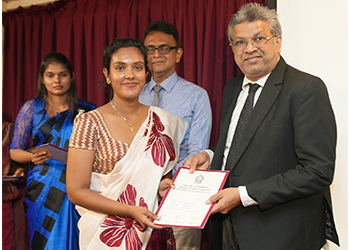
The Minister also presented letters of appointment to 17 newly recruited translators to the Department of Official Languages. In addition, three translators were honoured for carrying out translation assignments entrusted to them by the Department of Official Languages. Prizes and certificates were also presented to university students who participated in a competition conducted among students following special degree programmes in Translation Studies.
The keynote address for International Translation Day was delivered by veteran translator Mr. Gamini Viyangoda.
The Commissioner General of Official Languages, Mr. Tilak Nandana Hettiarachchi, and Additional Secretary to the Ministry of Justice and National Integration, Mr. Samantha Wijesinghe, also addressed the occasion.